Sabah, Best of Borneo

Situated on the beautiful island of Borneo, Sabah is one of the thirteen states which Malaysia is made of. Sabah is the second largest state in Malaysia and shares the island of Borneo with Sarawak, Brunei, and Indonesian Kalimantan.

Sabah is richly blessed with nature diversity, unique cultures, fun adventure, beautiful beaches, and fantastic cuisines for the adventurous taste buds. We have it all, from the world’s largest flower - the Rafflesia, one of the highest mountains in South East Asia - Mount Kinabalu, to one of the world’s top dive sites - Sipadan Island. Sabah is also known for her great natural treasures which include the world-renowned Danum Valley Conservation Area and Tabin which is Sabah’s largest wildlife reserve.

Not only will you be amazed by the places to see and things to do here, you will also be treated with unique Sabahan hospitality. Explore the unique culture and tradition of Sabah and get ready to experience sweet memories to last a lifetime!

Borneo Island

Borneo is the third largest island in the world and is located at the centre of the Maritime Southeast Asia. This island is divided between Indonesia, Malaysia and Brunei.

Nevertheless, for people outside of Indonesia, “Kalimantan” refers to the area which is occupied by Indonesia on the island of Borneo. Malaysia’s region of Borneo is called East Malaysia or Malaysian Borneo. The independent nation of Brunei occupies the remainder of the island, being the wealthiest of the rest.

Once known as North Borneo, Sabah was under the British colony during the late 19th century till the early 20th century. Sabah gained self-government on the 31st of August, 1963. Sabah, together with Malaya, Singapore and Sarawak formed the Federation of Malaysia on the 16th of September 1963. At 76, 115 square kilometers large, Sabah is the second biggest state in Malaysia after Sarawak.

People and Culture

The people of Sabah are known as Sabahans. Sabah is the third most populous state in Malaysia after Selangor and Johor; it also has one of the highest population growth rates in the country.

There are currently 32 officially recognized ethnic groups in Sabah with the largest non-indigenous ethnic group being the Chinese and the largest indigenous group being the Kadazan-Dusun people. Two other larger ethnic groups in Sabah are the Bajau and Murut, compared to other states in the country; Sabah has relatively very small population of Indians and South Asians.

Apart from the Sabahans’ very own diverse mother tongues, Bahasa Malaysia (national language) and English is widely spoken; Mandarin and some Chinese dialects are also widely spoken.

In Sabah, we greet people by saying “selamat datang” (welcome) and/or “terima kasih” (thank you) with a smile. Due to religious reasons, some may prefer not to have physical contact with others. However, a handshake is generally acceptable as a way of introducing oneself.

It’s customary to remove shoes before entering a mosque as well as homes. In places of worship, visitors are required to dress modestly. Nude sunbathing is not allowed and is very frowned upon. Avoid pointing your index finger at others, as this is considered rude in the local custom.

Visit Malaysia 2014

Peta pelancongan tempat-tempat menarik di Sabah

UTARAFM

Chatroll

Visit Malaysia 2014

Tabin Wildlife Reserve

>> Rabu, 22 Julai 2015

Tabin Wildlife Reserve is home to various endangered wildlife such as the Borneo Pygmy elephants, Tembadau and exotic birdlife. Covered in euryspecies lowland rainforest, Tabin nurtures a colossal number of tropical plants; some of which are rich in medicinal and therapeutic values. Wildlife photography aficionados and birdwathcing enthusiasts will find their visit to Tabin a truly pricelss experience! Whether you're a wild adventure seeker, an environmentalist earth mother, a photography lover, an animal activist, or simply just someone looking out for something fun; Tabin extends her arms in welcome. Here, you'll get a taste of nature like nowhere else.

Read more...

MANUKAN ISLAND

>> Rabu, 13 Ogos 2014

Pulau Manukan is located off the coast of downtown Kota Kinabalu. From Hyatt Regency Kinabalu, a 2-minute drive or 10-minute walk will bring you to the jetty at Jesselton Point (formerly Sabah Port Authority ferry terminal). 

There are a number of tour operators here that will bring you to Tunku Abdul Rahman Marine Park (which consists of the islands of Pulau Gaya, Pulau Sapi, Pulau Manukan, Pulau Sulug and Pulau Mamutik). The rental is charged per boat, which can range anywhere between RM100 and RM200. One boat can fit 4-6 people. A short 30-minute breezy boat ride will bring you here.

DESCRIPTION:
In general, the beach at Pulau Manukan is a bit less spectacular compared to the one in Pulau Sapi. Nonetheless, the its shortcomings above the water surface is compensated by the rich and colourful marine life that you can find underneath it. Really, people come to Pulau Manukan for the diving and snorkeling.

There is a resort on the island called Manukan Island Resort, operated by a leisure outfit by the name of Sutra Sanctuary Lodges. Other than that, there are basic tourist facilities provided on the beach, such as water-based activity centre (for renting kayaks, snorkeling gears, life jackets, etc), a small café and public bathroom.

Overall, I think the beach is quite nice. There are still plenty of tourists coming here for the underwater actions. In general, the beach can be regarded as sufficiently long for your personal space where you can spread your beach towels and put on your sunglasses.


Read more...

Desa Cattle

>> Selasa, 1 Julai 2014

The Desa Dairy Project,TENUSU DESA, of Desa Cattle (S) Sdn. bhd. is located at the foothills of Mt.Kinabalu at the Mesilau Plateau, Kundasang. Milk production commenced in March 1981. The project is now capable of producing 900,000 litres of milk per year.

The total area of this farm is 199 hectars of which 133 hectars have been planted with improved pasture such as Kikuyu, Narok Setaria and legume (white clover).

Most of the milking cows are Friesians and producing daily average of 14 litres high quality milk per cow. Friesians are the highest milk producers of all dairy cattle breeds and are most popular temperate breed worlwide. The milk contains a specially pleasing balance of cream, proteins, carbohydrate, vitamins and minerals unique to milk produced in mild temperate climates.


Desa Cattle (Sabah) Sdn. Bhd.

Mesilau Highland, Kundasang, Ranau, Sabah.

Contact us:
P.O.Box 71, 89308 Kundasang,
Ranau, Sabah.
Tel: 088-889562
Fax: 088-889530


GPS of Desa Cattle, Decimal coordinates (latitude, longitude):
6.013877, 116.593519p


Read more...

SIPADAN ISLAND

>> Rabu, 25 Jun 2014


Sipadan is the only oceanic island in Malaysia, rising 600 metres (2,000 ft) from the seabed. It is located in the Celebes Sea off the east coast of Sabah, East Malaysia (which is on the island of Borneo). It was formed by living corals growing on top of an extinct volcanic cone that took thousands of years to develop. Sipadan is located at the heart of the Indo-Pacific basin, the centre of one of the richest marine habitats in the world. More than 3,000 species of fish and hundreds of coral species have been classified in this ecosystem. Sipadan has been rated by many dive journals as one of the top destinations for diving in the world.


Frequently seen in the waters around Sipadan: green and hawksbill turtles (which mate and nest there), enormous schools of barracuda in tornado-like formations as well as large schools of big-eye trevally, and bumphead parrotfish. Pelagic species such as manta rays, eagle rays, scalloped hammerhead sharks and whale sharks also visit Sipadan.
A turtle tomb lies underneath the column of the island, formed by an underwater limestone cave with a labyrinth of tunnels and chambers that contain many skeletal remains of turtles that become lost and drown before finding the surface


HISTORY
In the past, the island was at the center of a territorial dispute between Malaysia and Indonesia. The matter was brought for adjudication before the International Court of Justice and, at the end of 2002, the Court awarded the island along with the island of Ligitan to Malaysia, on the basis of the "effective occupation" displayed by the latter's predecessor (Malaysia's former colonial power, the United Kingdom) and the absence of any other superior title. The Philippines had applied to intervene in the proceedings on the basis of its claim to Northern Borneo, but its request was turned down by the Court early in 2001. On April 23, 2000, 21 people were kidnapped by the Filipino Islamist terrorist group Abu Sayyaf. The armed terrorists arrived by boat and forced 10 tourists and 11 resort workers at gun point to board the vessels and brought the victims toJolo. All victims were eventually released.The island was declared a bird sanctuary in 1933 by the Colonial Government of North Borneo and re-gazetted in 1963 by the Malaysian Government.In his film Borneo: The Ghost of the Sea Turtle (1989) Jacques Cousteau said, "I have seen other places like Sipadan, 45 years ago, but now no more. Now we have found an untouched piece of art.


Read more...

MALIAU BASIN

>> Isnin, 28 April 2014

Sabah's Lost World Nature explorers will simply love the Maliau Basin as it is an excellent site for jungle trekking and bird watching. It contains an unusual assemblage of 12 forest types, comprising mainly of lower montane forest dominated by majestic Agathis trees, rare montane heath forest and lowland, and hill diperocarp forest. The highlight of the adventure is to trek the majestic 7 tiers Maliau Falls. Keen visitors must, however, obtain a permission to enter the Maliau Basin in advance from Yayasan Sabah. Also bear in mind that Maliau Basin is a remote, atavistic and isolated area with limited access, communications and safety facilities. Activities Nature explorers will simply love the Maliau Basin as it is an excellent site for jungle trekking and bird watching. At night, visitors may also take a night drive for wildlife spotting. Water babies can also take a dip in the beautiful waterfall.

Read more...

PELANCARAN PESTA KAAMATAN PERINGKAT NEGERI 2014

>> Jumaat, 28 Mac 2014


Datanglah beramai-ramai untuk menyaksikan acara-acara kebudayaan Daerah Kota Marudu

ACARA-ACARA MENARIK

20 APRIL 2014
* Pertandingan bercerita bahasa ibunda

24 APRIL 2014
* Pertandingan Sugandoi Kaamatan

26 APRIL 2014
* Pertandingan Mr. Harvest Tourism Kaamatan

01 MEI 2014
* Pertandingan Unduk Ngadau Kaamatan
* Pertandingan Sukan Tradisi
* Pertandingan Masakan Tradisi
* Pameran Hasil-hasil Pertanian, Ternakan dan Perikanan
* Persembahan Kebudayaan Tradisi
* Persembahan Artis-artis Tempatan

Read more...

Gomantong Caves - Sabah

>> Rabu, 4 Disember 2013

It was March and one of the highlights on the tour itinerary was a visit to the Gomantong Caves on the way to Sukau and the Kinabatangan Wildlife Sanctuary. The stopover at the caves was to be only for a couple of hours or so. Our 82km or 2 hr road trip from Sandakan was smooth enough and all was going well. We were dry and comfy in the van, the rainclouds were wringing down copious amount of rain and a friendly conversation was getting along with the other guests on the trip. There were only 3 of us on this tour and it was nice not to be cramped in with a large group. Then the driver took a turnoff towards Kampung. Sukau ( Sukau Village ) and traveled on for another 20 kms (12.4 miles) on a bumpy offroad to the main entrance of the caves. Little did we know that the 20km this boneshaker ride was only a teaser to the remaining trip ahead of us.It was March and one of the highlights on the tour itinerary was a visit to the Gomantong Caves on the way to Sukau and the Kinabatangan Wildlife Sanctuary. The stopover at the caves was to be only for a couple of hours or so. Our 82km or 2 hr road trip from Sandakan was smooth enough and all was going well. We were dry and comfy in the van, the rainclouds were wringing down copious amount of rain and a friendly conversation was getting along with the other guests on the trip. There were only 3 of us on this tour and it was nice not to be cramped in with a large group. Then the driver took a turnoff towards Kampung. Sukau ( Sukau Village ) and traveled on for another 20 kms (12.4 miles) on a bumpy offroad to the main entrance of the caves. Little did we know that the 20km this boneshaker ride was only a teaser to the remaining trip ahead of us.Collection of birds' nests and the value of this produce have been recognised for as long as the Chinese djongs and ships sailed these waters and that dates back to the 13th Century. Before licensing was put into effect, the harvesting of birds' nests in the caves was managed by families on a rotational basis and the rights were inherited and passed down for generations. These days, the licensing is issued by the Wildlife Department, is based on tenders and costs about RM300,000 per harvest season. Under the Birds' Nest Ordinance and the Forest Enactment of 1968, heavy fines are imposed on unlicensed collectors. These birds' nests are so valuable that during non harvesting seasons, guards are posted at the cave to stop any poaching.Gomantong is one cave that is definitely worth a visit but one must make sure that the visit coincides with the harvesting seasons of the swiftlets' nests which happen to be from February to April and from July to September. The first harvest period coincides with the swiftlets' breeding season and ends before nesting begins. Harvesters collect the existing nests which prompts the swiftlets to construct new nests. The Black-Nest Swiftlets build nests with bits of feather, crumbs of moss / lichen and droppings mixed in with the saliva These dark coloured nests are considered of poor quality. The Edible-nest Swiftlet, on the other hand, build nests that are purely from their saliva. The white nests are smaller than of the Black-Nest Swiftlets but by far more valuable. Per kg of this quality will cost approximately USD1,000 - USD2,000 in the open market. The swiftlets build their nest at night, after a day out searching for food. The new nest will take about 30 to 35days to complete and once that's done, and the mother lays a maximum of 2 eggs which she broods for 1 month. When the fledglings are old enough to leave the nest, the harvesting season begins again. The harvesters must make sure that the nests are collected only after they are abandoned by the young swiftlets.But get this, the most prized birds' nest are the reddish brown nests believed to be saliva mixed with blood which the bird expels during nest building. It is thought to be highly nutritious. Researchers have found that contrary to this belief, the colour is derived from the oxidation of iron which results in rust. Rust definitely does not have nutritious value! Swiftlets build their nests at least 10m above ground but in lofty caves such as at Gomantong, the nests are some 90m above the cave floor. Harvesting is a tricky business. The harvesters have to constantly maintain and mend the rattan and bamboo ladders used to reach the nests 90 - 100m high. The first cave is known as Simud Hitam ( Black Cave ). Nests collected are of poorer quality. Further up from this cave is another called Simud Putih ( White Cave ), the larger of the two caves. This is located some 90m above Simud Hitam and is a treacherous climb. Anyone wanting to visit Simud Putih will have to apply for permit to do so and getting into the cave takes 5 hours. The prized white nests are found here.For a season's harvest, the worker gets a salary of RM3,500, ridiculously low for a task so dangerous but it is a lot of money to the locals. Once the nests are collected, it is carefully packed in gunny sacks and lowered down to the cave floor. The manager - normally the only Chinese in the crowd of locals, will quickly sew up the gunny so that no pilfering occurs.Whilst we were happily walking along the plankwalk, the workers were stomping up and down the guano mounds as they go about their work. The mounds looked alive, as the workers walked past, the ground seemed to heave. The strange dank, ammonia smell in the air was laced with a faint familiar stench. As the beam of our torches picked up the movement, immediately the stench came to light (sic). It was a seething blanket of cockroaches! Cave cockroaches! The cave is alive! Cockroaches, cave centipedes, millipedes, beetles, worms, spiders - a variety of bugs and a closed ecosystem. Everything in the cave is recycled and reused. Bats and fledglings that are too weak or too young to fly, fall to the squeegee cave floor and are quickly devoured, leaving only a trail of bones and beak. even in a small reserve like Gomantong there are species endemic such as O. mirabile, a separate species of Opisthostoma which is a land snail that lives on the ancient rocks of Gomantong in Borneo and nowhere else on Earth.After an hour in darkness, it was nice to step out into the sun again. Many visitors apparently have the good fortune to catch glimpses of wildlife such as orangutans. According to a survey conducted by HUTAN (an NGO based in Sukau, Kinabatangan) and the Sabah Wildlife Department in 2001, the orangutan population density was 3.8 individuals/km². An estimated population of 147 individuals shares this small protected area making it a high possibility of sightings in the area. The reserve is also home to a variety of birds but we didn't get to see any ~ The rain was still pelting down on us as we hurried down the plankwalk to our waiting van. At least it washed off some of the dirt from our ponchos but didn't dampen our spirits as our vehicle spluttered off back onto the offroads and towards Sukau. The trip was definitely enlightening! Paying $100s for a bowl of coagulated bird saliva is simply absurd, risking lives for a mere several thousand ringgit is.well, a simple way of life..

Read more...

RUMAH TERBALIK (Upside Down House)

>> Ahad, 31 Mac 2013

TUARAN - Turn your world upside down when you visit this unique house in Tamparuli – literally! The ‘Rumah Terbalik’ (which translates to Upside Down House) is the first of its kind in South East Asia and among the five upside-down structures in the world (3 are found in Europe and another in Japan). The house was opened to the public in early February 2012 and has since been attracting visitors from near and far. The house itself is hard to miss, having been flipped upside down, with its floor facing skyward. Everything inside the house, from furniture to household appliances, hover above your head, as the ceiling is actually the floor. Visitors will notice some distinguishing Sabahan dĂ©cor and features showcased in this house. In the garage, a car is parked upside down. It might seem disorienting in the first few seconds, but the fascination of it all takes over. This architectural wonder has also been included in the Malaysia Book of Records for being the first of its kind in the nation. Visitors can enjoy a meal or afternoon snack at the Rumah Terbalik CafĂ© or pick up a souvenir at the Gift Shop. Guided tours are available. Getting There The house is located along Mile 21, Jalan Telibong, Tamparuli. The journey by road takes approximately 40 minutes. Taxis can take you from the city centre but be sure to make return arrangements as taxis on standby may not be readily available at this location. Opening hours Daily (including public holidays): 8:00am to 10:00pm

Read more...

SUNGAI MOROLI, KAMPUNG LUANTI - FISH MASSAGE

Fancy something more unique than your average spa? Then head on to Kampung Luanti, Ranau for a fish massaging session! Located in Kampung Luanti, Ranau, 131 kilometers from Kota Kinabalu (2 hours and 40 minutes drive away); this fish massage ‘spa’ is managed by the Kampung Luanti JKK and lead by Mr. Jeffrin Majangki. In the Local KadazanDusun dialect, ‘tagal’ means ‘no fishing’, and the main purpose of the ‘tagal’ is to preserve the environment as well as the ecosystem to benefit the future generation. ‘Ikan Pelian’ or Malaysian Mahseer comes from the family of Cyprinidae. These fishes are specifically trained by the villagers to perform the healing massage activities. The fish massage is deemed to have a curative effect on those who suffers from psoriasis. Come to Kampung Luanti for regular fish massages and you will enjoy smoother and suppler skin - just like a baby’s bottom. If the idea of fishes nibbling off your dead skin doesn’t thrill you, try other activities such as jungle trekking and camping. Should you intend to stay longer, Kampung Luanti is also equipped with a homestay programme to make visitors feel at home every time. Tariffs Entrance Fee Status Within Ranau (Local) Adult >18 yrs RM 3.00 Children <18 yrs RM 1.00 Outstation (Local) Adult >18 yrs RM5.00 Children <18 yrs RM 2.00 International Adult/ Children RM 10.00 Getting There Transportation Fare (one way) Departure point Return Point Remarks* Bus (direction to Kundasang or Ranau) KK to Ranau RM 15.00 (per person) Ranau to Kg. Luanti RM 6.00 (per person) TERMINAL BAS BANDARAYA (UTARA) City bus terminal (North) Change bus in Ranau to Kg. Luanti Beside the entrance of poring hot spring Change bus in Ranau to KK KK - Ranau 7:30am-5:00pm Ranau- Kg. Luanti 7:00am-3:00pm Taxi Approximate: 1) RM 160 per taxi 2) RM 300 per taxi 1) Ranau taxi stand (next to Merdeka Field) 2) Hotel · Take bus from Kg. Luanti to Ranau town. · find a Taxi back to KK Car rental From RM 180 and above per day per car · Car rental company · Hotel lobby for car rental service Refer to car rental list

Read more...

KEHANGATAN SAMBUTAN PESTA TAHUN BARU CINA

>> Jumaat, 27 Januari 2012


PITAS- Kemeriahan sambutan pesta tahun baru cina baru saja bermula, yang mana sambutan pesta tahun baru cina peringkat Kg. Salimpodon Laut. Anjuran En. Ruddy Awah ini bermula pada 23-01-2012 sehingga 28-01-2012, majlis yang diadakan ini adalah sambutan pesta tahun baru cina yang telah menjadi acara tradisi yang mana akan di adakan setiap tahun. sambutan tahun baru cina kali ini diadakan selama enam hari enam malam yang mana setiap hari akan menjalankan pelbagai aktiviti seperti pertandingan karaoke, pertandingan sepak takraw, pertandingan pancak silat, battle of the band, persembahan silap mata dan tarik tali. Majlis kali ini lebih hangat dengan kehadiran beberapa orang artis jemputan seperti Datuk M. Daud Kilau, Nera AF, Candy AF, Nadia Ali, Yantzen(rusty blade), Jandrywine(macam di KK), Pauline, Sheryll Josh, Peter Nianti, Meeda Hamzani,Abu Bakar Elah, S.Welly dan ramai lagi.
"Satu-satunya pesta di Sabah yang unik dan luar biasa serta terpanjang sambutanya" kata tuan pegawai daerah iaitu En. Sapdin Ibrahim yang mana telah merasmikan majlis pembukaan pesta tahun baru cina yang telah di adakan di dataran En. Ruddy Awah. Beliau juga menegaskan penganjuran sambutan pesta seperti ini sangat baik sekali kerana boleh menarik lagi pelawat atau pelancong untuk datang ke daerah Pitas, sesuai dengan slogan "PITAS DESTINASI BARU PELANCONGAN" RM 1juta yang akan di belanjakan untuk menaik taraf beberapa tempat seperti pusat pelancongan di Kg.Malubang yang terkenal seperti batu supirak, batu talam, batu orang berunsai dan telaga air tawar di kawasan air masin. En. Ruddy Awah berkata tujuan beliau mengadakan penganjuran seperti ini agar dapat berkumpul dengan keluarga dan sahabat handai setiap tahun dan memberi hiburan kepada semua pengunjung yang hadir, katanya lagi "saya sanggup belanjakan wang ringgit yang besar jumlahnya semata-mata untuk berhibur dengan keluarga dan rakan-rakan khasnya warga Pitas" beliau juga sangat berterima kasih kepada ahli keluarga dan semua AJK pelaksana yang banyak membantu untuk menjalankan penganjuran inidengan jayanya, katanya lagi beliau telah menghantar surat permohonan kepada MALAYSA BOOK OF RECORDS agar penganjuran ini dapat di masukan dalam senarai penganjuran yang terpanjang sambutannya di Malaysia. Media rasmi iaitu radio online UtaraFM adalah media yang bertanggungjawab untuk memberi liputan secara online sepanjang sambutan pesta ini berlangsung, yang mana di meriahkan dengan kehadiran Dee Jay seperti DJ RUMPUTT, DJ SIIPUTT, DJ KUPANG dan ramai lagi, untuk mendengar secara LIVE pendengar bolehlah terus saja masuk ke www.utarafm.net atau http://destinasibarupelancongansabah.blogspot.com/

Read more...

AGNES KEITH’S HOUSE

>> Khamis, 8 September 2011


Agnes Keith adalah seorang rakyat Amerika yang tinggal di Sandakan dari tahun 1934 hingga 1952 bersama suaminya Harry Keith, seorang konservator pengarah pertanian. Mereka tinggal di dalam sebuah rumah papan yang cantik letaknya di Jalan Istana, Bukit Merah. Rumah ini telah musnah semasa perang dunia kedua dan dibina semula oleh kerajaan mengikut reka bentuk Harry Keith. Beliau kembali bertugas selepas perang dunia kedua. Agnes Keith ialah seorang penulis yang mahir dan seorang pemerhati yang tidak berat sebelah. Beliau telah menulis tiga buah buku yang mengambarkan keadaan dan kehidupan di Sandakan pada masa itu, tajuk-tajuk buku yang dikarangnya ialah ‘Land below the Wind’, ‘Three came home’ dan ‘White man returns’. Buku bertajuk "Land Below The Wind" telah mempopularkan Negeri Sabah sebagai sebuah negeri di bawah bayu di peringkat antarabangsa. Rumah Agnes Keith akan dijadikan Muzium Cawangan Sandakan.

Read more...

AUSTRALIAN MEMORIAL


Semasa Perang Dunia ke Dua, Sandakan telah di pilih oleh orang Jepun sebagai pusat khemah tahanan iaitu ‘Penjara Masa Perang’ untuk menahan orang-orang tahanannya. Satu daripada khemah ini terletak di belakang Taman Rimba, Batu 8, Jalan Labuk. Kebanyakan orang-orang tahanannya adalah terdiri daripada orang Australia. Tinggalan bangunan dan peralatan-peralatan yang lama masih boleh dijumpai di kawasan ini. Pada tahun 1986 melalui sumbangan derma dan sokongan dari keluarga-keluarga serta kawan-kawan orang-orang tahanan Australia, tempat ini telah dibersihkan dan sebuah batu peringatan telah didirikan untuk memperingatkan jasa-jasa mereka semasa penjajahan Jepun.

Dalam angkaran yang dibuat terdapat 2,000 orang tahanan Australia dan 750 orang British telah d itahan di Daerah Sandakan. Pada tahun 1944, bulan September jumlah tahanan yang tinggal ialah 1,800 orang Australia dan 600 orang British. Mereka tidak diberi makanan, dan ramai yang jatuh sakit. Dalam bulan September ini juga, walaupun sakit mereka di paksa berjalan kaki melalui hutan-rimba sehingga ke Ranau. Selama setahun perjalanan menuju ke Ranau, jumlah orang tahanan yang sebanyak 2,400 telah tinggal menjadi 6 orang saja. Perjalanan menuju ke Ranau ini dikenali sebagai ‘Death March’.

Read more...

LABUK BAY PROBOSCIS MONKEY SANCTUARY


Labuk Bay Proboscis Monkey Sanctuary menawarkan satu lagi kawasan pemeliharaan Monyet Belanda (Proboscis Monkey) untuk pelancung yang ingin melihat haiwan ini secara dekat tanpa perlu pergi lebih jauh lagi. Santuari ini terletak di tengah-tengah hutan bakau di sepanjang kawasan berdekatan Kampung Samawang di Labuk Bay, Sandakan. Ia terletak sejauh 38 km dari Lapangan Terbang Sandakan dan mengambil masa lebih kurang sejam untuk sampai ke pusat ini. Separuh daripada jalan tersebut adalah jalan gravel. Bagi sesiapa yang suka melihat haiwan unik ini, ini adalah suatu kemestian untuk melawat tempat ini. Jadual waktu pemerhatian ialah pada 11.30 pagi - 1.30 petang dan 4.30 petang - 6.00 petang.

Read more...

PUSAT PEMULIHARAAN ORANG UTAN SEPILOK


Pusat Pemuliharaan Orang-Utan Sepilok yang terletak 25 kilometer dari Bandar Sandakan, mempunyai keluasan 43 kilometer persegi. Pusat Pemuliharan Orang Utan Sepilok merupakan sebuah hutan asli yang terpelihara. Orang ramai dapat melihat Orang-Utan (Wild Red Apes) di tempat asal semulajadi mereka iaitu di hutan hujan tropika ini. Tujuan utama Pusat Pemuliharaan Orang-Utan ini adalah untuk mendidik anak-anak orang-utan yang terpisah dari ibunya untuk berdikari di dalam hutan.

Pada tahun 1957, pembalakan telah diharamkan dan pasukan simpanan telah dilantik untuk membuat penyelidikan. Dalam tahun 1963 semasa Sabah merdeka dalam Malaysia, Jabatan Perhutanan telah menbentuk satu Cawangan Penjaga Binatang Perburuan (Game Branch). Pada masa itu, dipercayai bahawa orang-utan ialah binatang yang susah didapati dan makin berkurangan. Musim itu juga anak-anak orang-utan sangat terkenal sebagai binatang perliharaan di kalangan rakyat Sabah dan di tempat lain. Anak-anak orang-utan biasanya di tangkap semasa pembalakan dan pembersihan hutan. Dengan adanya Cawangan Penjaga Bintang Perburuan ini, satu undang-undang baru telah dikeluarkan iaitu ‘Dilarang menangkap dan memelihara orang-utan’. Oleh itu Sepilok telah dipilih sebagai sebuah pusat pemuliharaan orang utan. Pelawat-pelawat boleh ke pelantar untuk melihat orang-orang utan datang dari dalam hutan untuk mendapatkan makanan dua kali sehari mereka iaitu susu dan pisang. Masa-masa memberi makan setiap hari ialah pada pukul 10:00 pagi dan 3:00 petang.

Read more...

PULAU-PULAU PENYU DI SABAH


Di seberang Pulau Libaran, 40 kilometer dari Timur-Utara Sandakan dan berhampiran dengan Sempadan Malaysia dan Filipina, terdapat sekelompok pulau-pulau yang terdiri daripada tiga pulau kecil yang berhampiran iaitu Pulau Selingan, Pulau Gulisan dan Pulau Bakkungan Kecil. Pulau-pulau ini merupakan pulau-pulau yang terutama di timur-selatan Asia di mana penyu-penyu mendarat dan bertelur di pantainya. Penyu-penyu ini biasanya bertelur pada waktu malam selepas jam 8 bila air surut. Pada masa itu anda boleh menyaksikan penyu-penyu yang mendarat mengorek lubang di pantai dan bertelur ke dalamnya.

Penyu-penyu yang bertelur di pulau-pulau ini ialah 83% ‘Green Turtles’ dan 17% ‘Hawksbill Turtles’. Kebanyakan ‘Green turtles’ bertelur di Pulau Selingan manakala kebanyakan ‘Hawksbill Turtles’ bertelur di Pulau Gulisan, kerana terdapat terumbu karang yang luas di kawasan ini. Manakala sebahagian kecil dari kedua-dua jenis penyu ini bertelur di Pulau Bakkungan Kecil. Penyu-penyu ini bertelur sepanjang tahun, tetapi kemuncak ia bertelur ialah pada bulan Julai hingga bulan Oktober bagi ‘Green Turtles’ yang bertelur lebih kurang 110 biji dalam satu lubang dan Februari hingga April bagi ‘Hawksbills Turtles’ yang bertelur di antara 70 hingga 180 biji telur sekali. Telur-telur ini akan di peram selama 50-60 hari sebelum ia menetas menjadi anak penyu dan berenang balik ke laut. Dalam penyelidikan, penyu-penyu betina ini akan kembali untuk bertelur selepas 20 tahun dan akan kembali bertelur selepas beberapa tahun berikutnya.

Di antara pulau-pulau penyu ini, Pulau Selingan juga merupakan salah sebuah tempat pelancongan yang menarik. Dengan menggunakan bot laju anda boleh menyaksikan keindahan pulau ini dan kejernihan lautnya yang cantik dengan beraneka jenis ikan. Pulau Selingan terdapat sebuah chalet iaitu Chalet Pulau Selingan. Ia mempunyai 15 buah bilik yang mempunyai bilik mandi. Chalet ini juga mempunyai restoran.

Read more...

PULAU BERHALA


Pulau Berhala terletak di luar pintu masuk Teluk Sandakan berdepan dengan perkampungan Sim-Sim. Antara yang unik di pulau ini adalah dua buah bukit batupasir yang bercantum dengan ketinggian 600 kaki. Di atas bukit terdapat rumah api. Kawasan curam bukit tersebut adalah Hutan Simpanan di mana terdapat banyak tumbuhan tempatan yang hanya boleh didapati di kawasan pinggir laut yang menjadi tumpuan ahli botani. Terdapat sebuah kampung di bahagian barat pulau yang bersambung dengan tanah lapang ke pantai yang dilengkapi dengan kemudahan perkelahan. Di hujung bahagian Selatan pulau ini terdiri daripada tebing karang yang curam berwarna kemerah-merahan. Terdapat beberapa gua di tebing karang ini. Sebelum Perang Dunia Ke-2 Pulau Berhala pernah digunakan sebagai penempatan pesakit kusta, manakala semasa Perang Dunia ke-2 pula Orang Jepun menggunakan Pulau Berhala sebagai ‘Pusat Tahanan Perang’. Puan Agnes Keith merupakan salah seorang daripada tahanan perang di antara bulan Mei 1942 hingga January 1943 sebelum dipindahkan ke Kuching, Sarawak. Pada masa ini Pulau Berhala merupakan salah sebuah tempat perkelahan yang terkenal.

Read more...

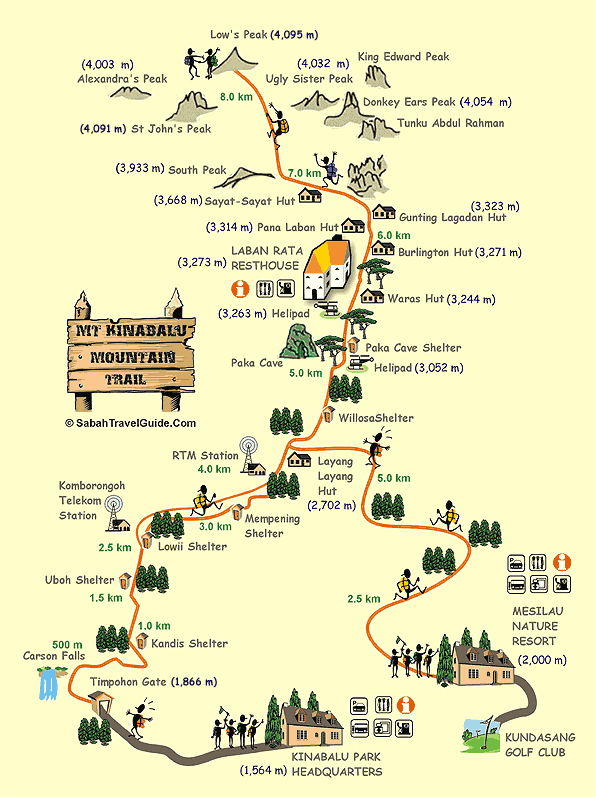
Gunung Kinabalu

>> Rabu, 1 Jun 2011


Gunung Kinabalu terletak di dalam Taman Kinabalu yang berada sejauh 80km timur dari Kota Kinabalu.Gunung Kinabalu mempunyai ketinggian setinggi 4,095 meter daripada aras laut.
Pengangkutan
Para pelancong yang berada di Kota Kinabalu boleh menuju ke Taman Kinabalu dengan menaiki bas yang menuju ke Ranau, Sandakan atau Tawau. Perjalanan ini akan memakan masa selama 1 – 2 jam dengan anggaran kos sebanyak RM15 – RM20.
Para pelancong juga boleh menyewa kereta di Lapangan Terbang Kota Kinabalu dengan kadar sewa yang berpatutan dan boleh dirunding bergantung kepada syarikat yang mengendalikannya.

Padas Rafting
Sungai Padas terletak di kawasan pedalaman di barat daya Kota Kinabalu. Para pengunjung akan dapat mengalami sendiri pengalaman berkayak di sungai berskala III – IV dan aktiviti ini sesuai bagi mereka berumur 12 hingga 55 tahun.

Read more...

Poring Hot Spring


salam 1Malaysia bertemu lagi kita pada hari ini..hehe..jauh berjalan luas pemandangan itu lah peribahasa yang boleh mengambarkan kita perlu melancong…bila melancong ni sedap ja mata memandang keindahan flora dan fauna..hehe..ok hari ini saya ingin membawa anda melancong di Poring hot Spring, Sabah..apa tempat² yang menarik di Sabah yang wajib korang pergi? jawapannya ada disini..teruskan membaca k..
pada post kali ini saya akan menunjukkan lokasi² menarik beserta sedikit info² tentang tempat yang menarik ini..


Poring Hot Spring terletak kira-kira 40 km di timur laut pusat Taman Kinabalu. Poring bagi KadazanDusun merupakan sejenis spesies pokok Buluh yang tumbuh di kawasan itu. Ia terkenal kerana kolam air panas dan jambatan gantungnya yang unik.
Kolam air panas Poring dikenali kerana air panasnya mengandungi galian sulfur yang boleh menyegarkan badan. Kolam air panas semulajadi ini amat sesuai bagi menghilangkan rasa penat dan juga sakit sendi bagi mereka yang telah mendaki Gunung Kinabalu.

Para pelancong juga berpeluang menikmati pemandangan yang indah apabila menyusuri jambatan gantung sepanjang 157.8 m dengan ketinggian 41 meter di atas pokok.
Terdapat juga Taman Kupu-Kupu, Pusat Pemuliharaan Orkid di sini dan juga jika bernasib baik anda juga berpeluang melihat sendiri Rafflesia yang tumbuh subur.

Pengangkutan
Para pelancong boleh menaiki bas awam dari Kota Kinabalu untuk ke Kolam Air Panas Poring tetapi perkhidmatan yang mereka sediakan cuma sekali dalam sehari sahaja.
Cara lain untuk ke sana ialah dengan menaiki teksi dari Ranau dengan anggaran kos sebanyak RM30.00.

Read more...

Peta pelancongan tempat-tempat menarik di Sabah

Read more...

Tanjung Simpang Mengayau


Tanjung Simpang Mengayau juga dikenali sebagai Northernmost Tip of Borneo. Ia terletak di daerah Kudat, Sabah. Tempat ini merupakan titik pertemuan antara Laut Sulu dan Laut China Selatan.Di Tanjung Simpang Mengayau, para pengunjung boleh menyaksikan pemandangan yang mempersonakan. Tempat ini dikelaskan sebagai salah satu tempat pusat pelancongan yang paling cantik di Sabah.
Pengangkutan
Tempat terkenal ini terletak 50km dari bandar Kudat.Para pengunjung boleh menaiki kereta atau teksi dan masa yang diperlukan untuk sampai ke destinasi dianggarkan lebih kurang 40 minit.

Read more...

About This Blog

Lorem Ipsum

  © Blogger templates Palm by Ourblogtemplates.com 2008

Back to TOP